

If your fuel bills feel higher than they should be, you’re likely wondering how to improve efficiency and asking: Does 6.7 Powerstroke MPG after DPF delete actually improve enough to matter?
Short answer — yes, in most cases it does. But the size of the gain depends on tuning, driving habits, and how the truck is used.
Let’s break down real 6.7 Powerstroke MPG numbers, what changes after a delete, and whether the improvement makes financial sense.
6.7 Powerstroke MPG After DPF Delete (Stock vs Deleted)
From the factory, the Ford 6.7 Powerstroke MPG delivers respectable fuel economy for a heavy-duty diesel truck. But once deleted, fuel efficiency often improves, as regeneration cycles are eliminated and exhaust restriction is reduced.
Here’s a realistic comparison based on owner reports.
Fuel Consumption Comparison Between Original and DPF Delete
| Condition | City Fuel Consumption | Highway Fuel Consumption | Trailer Fuel Consumption |
| Stock MPG | 13-15 MPG | 17-19 MPG | 9-12 MPG |
| Deleted MPG | 16-18 MPG | 20-23 MPG | 11-14 MPG |
| Typical Gain | +2-3 MPG | +2-4 MPG | +1-2 MPG |
On average, 6.7 Powerstroke MPG after DPF delete improves by 2–4 MPG depending on driving conditions.
Towing vs Empty – 6.7 Powerstroke Fuel Mileage Improvement
Fuel economy changes significantly depending on load.
Improved Fuel Efficiency When Driving Unloaded
When empty, deleted 6.7 Powerstroke MPG typically reaches its highest potential. Without regeneration events adding extra fuel, highway cruising often produces low-20 MPG results.
Drivers focused on steady commuting often report strong MPG on 6.7 Powerstroke after the delete.
Improved Fuel Efficiency When Driving With a Trailer
Under load, gains are smaller but still noticeable. Most trucks see a 1–2 MPG improvement in the 6.7 Powerstroke deleted MPG while towing. Over long hauls, that adds up.
Fuel Consumption Comparison
| Driving Condition | Stock MPG | Deleted MPG |
| Empty City | 14 MPG | 17 MPG |
| Empty Highway | 18 MPG | 22 MPG |
| Towing Moderate Load | 11 MPG | 13 MPG |
| Heavy Trailer | 9-10 MPG | 11-12 MPG |
If you own an F250 6.7 Powerstroke, you can expect similar fuel economy results.
6.7 Powerstroke MPG: Tuned & Deleted vs. Delete Only
Deleting alone helps. But tuning is where serious efficiency gains happen.
1) MPG With Basic Delete (No Custom Tune)
With a basic delete, expect moderate gains—usually 1–2 MPG.
This setup improves exhaust flow but doesn’t optimize fuel mapping.
2) MPG With Performance/Eco Tune
With proper tuning, gains become more noticeable.
Many owners report 6.7 Powerstroke MPG tuned and deleted improving by 3–4 MPG compared to stock.
For example:
- After a DPF delete and proper tune, 6.7 Powerstroke highway MPG often increases into the 18–22 MPG range.
- A DPF delete plus quality tune typically produces about a 2-4 MPG improvement over stock in mixed driving conditions.
3) Why Tuning Is Critical for Max MPG Gains
Tuning adjusts fuel delivery, timing, turbo response, and shift points.
Without tuning, you're not fully optimizing airflow and combustion efficiency.
Here's how setups compare:
| Setup | Average MPG Gain | Power Increase |
| Delete Only | +1-2 MPG | +20-40 HP |
| Delete + Eco Tune | +3-4 MPG | +40-70 HP |
| Delete + Performance Tune | +2-3 MPG | +80-150 HP |
For drivers focused on efficiency, tuning is what maximizes 6.7 Powerstroke MPG after DPF delete.
Why Deleting the DPF Can Increase MPG on 6.7 Powerstroke?
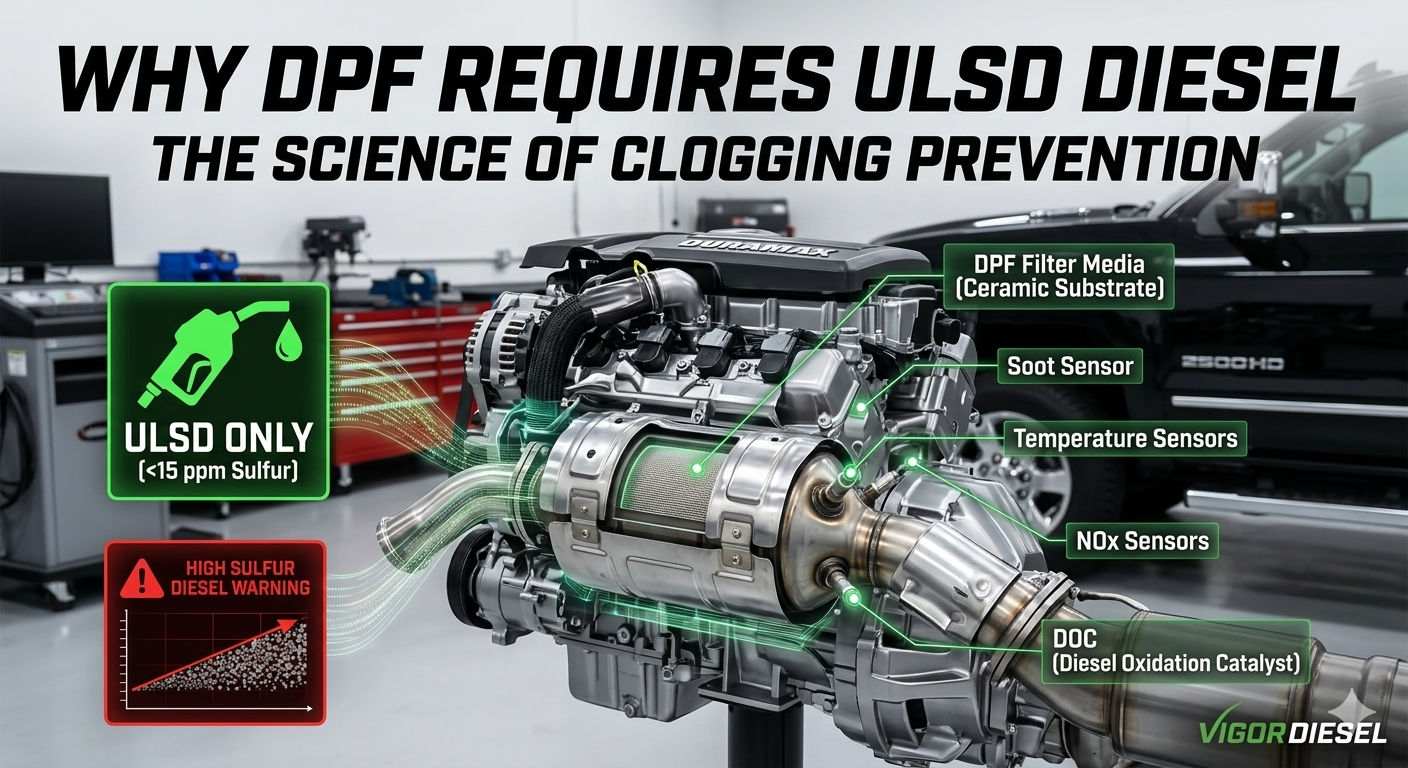
Now let's talk about why deleting the Diesel Particulate Filter (DPF) can improve fuel economy.
How the DPF System Affects Fuel Efficiency - DPF regeneration requires additional fuel.
Short-distance driving increases the regeneration frequency - Frequent short trips trigger more regeneration cycles. Each cycle burns extra diesel, worsening fuel consumption in stop-and-go driving.
Removing the DPF stops the regeneration cycle - DPF deletion eliminates these fuel-wasting cycles entirely. This ensures consistent efficiency without periodic interruptions.
Exhaust flow and back pressure - Removing the DPF reduces exhaust restriction. Gases flow freely, lowering back pressure and allowing better engine breathing.
Overall impact on fuel economy - These changes promote cleaner combustion and explain why 6.7 Powerstroke MPG after DPF delete typically improves.
High-flow options like DPF delete pipe collection from Vigor Diesel are commonly used in delete setups to improve exhaust flow and overall efficiency.
Factors That Affect 6.7 Powerstroke MPG After Delete
Not every truck sees identical gains. Here’s why.
1) Tuning Quality and Power Level
Aggressive performance tunes may reduce fuel economy. Eco-focused tuning helps increase MPG 6.7 Powerstroke results.
2) Driving Style and Speed
Hard acceleration destroys MPG. Maintaining steady speeds improves MPG for 6.7 Powerstroke dramatically.
3) Vehicle Load and Road Conditions
Heavy loads and steep grades reduce gains. Flat highway driving maximizes efficiency.
4) Exhaust System and Kit Setup
A properly installed system ensures expected 6.7 Powerstroke delete MPG results.
How to Improve MPG on 6.7 Powerstroke (Pro Tips)
If you’re looking for how to improve MPG on 6.7 Powerstroke, start with the basics.
- Perform Proper Adjustments: Choose a reputable tuner that offers an eco calibration.
- Drive Cautiously and Maintain a Steady Speed: Highway cruising between 60–70 mph delivers optimal MPG.
- Assist With Deactivation: Limit unnecessary idling. Long idle times waste diesel.
- Monitor and Adjust: Track mileage regularly to understand trends.
- Maintain Tire Pressure and Reduce Weight: Underinflated tires reduce fuel economy quickly.
- Regularly Maintain Engine Oil and Fuel System: Clean fuel filters and quality oil help improve MPG on 6.7 Powerstroke.
Even stock owners can apply these steps to increase MPG 6.7 Powerstroke performance.
6.7 Powerstroke Delete Cost vs Fuel Savings
1) Removal Costs
Delete kits and tuning typically range between $1,500–$3,500, depending on setup and labor.
2) Fuel Efficiency Savings
Further calculations reveal approximate fuel costs: If 6.7 Powerstroke MPG after DPF delete improves by 3 MPG and you drive 20,000 miles per year (at $3.50/gallon diesel), annual savings reach ~$1,750 — offsetting delete costs in 1–2 years.
Is It Worth It?
For high-mileage drivers and frequent towers, the fuel savings and drivability improvements can offset cost over time. However, owners must also consider legal and emissions regulations in their region.
FAQs
Conclusion
If you're chasing better fuel efficiency, 6.7 Powerstroke MPG after DPF delete can improve by 2–4 MPG under the right conditions.
Highway drivers and those who tow frequently benefit the most, especially when pairing delete components with proper eco tuning.
That said, results depend heavily on setup quality and driving habits. Done correctly, improvements in MPG on 6.7 Powerstroke trucks can be both noticeable and cost-effective over time.