

6.7 Powerstroke problems are a common topic among Ford Super Duty owners. While the 6.7 Powerstroke is known for strong torque, advanced emissions systems, and solid towing capability, its reliability—especially in earlier model years—has been widely debated due to recurring issues.
In this guide, we cover the most common problems with 6.7 Powerstroke, explain how reliability has changed across the 2011–2025 model years, and share practical solutions to reduce long-term risks for owners and buyers.
6.7 Powerstroke Reliability: The Short Answer
Overall Reliability at a Glance
Overall, the 6.7 Powerstroke is considered fairly reliable among modern heavy‑duty diesel engines, provided you maintain it properly. Early 2011–2014 models had more frequent turbo, fuel system, and sensor issues, while later trucks benefited from improved components and emissions design. Buyers and owners should be aware of these differences when assessing reliability.
Lifespan Benchmark
Owner and industry reports suggest well-kept 6.7 Powerstroke engines often reach 300,000–500,000+ miles, with later models usually performing best. Proper maintenance and monitoring of weak points can extend the engine's useful life even further.
Key Reliability Advantages
- The modern common‑rail fuel system reduces traditional HEUI injection failures.
- Strong block and torquey turbo design help with towing reliability.
- Aftermarket support and updates available for weak components.
Compared to Competitors
| Engine | Typical Life Expectancy |
| 6.7 Powerstroke | 300k-500k+ miles |
| 6.7 Duramax | 250k-400k miles |
| 6.7 Cummins | 350k-600k+ miles |
Among these modern diesel engines, the 6.7 Powerstroke is reliable and well-suited for heavy towing. It generally lasts longer than the 6.7 Duramax, though not quite as long as the 6.7 Cummins. Strong torque and drivetrain design provide good traction under load. Early 6.7 Powerstroke trucks (2011–2014) had more factory issues, so owners should focus on regular maintenance. However, earlier 6.7 Powerstroke models (2011-2014) experienced more factory-related issues, making continued maintenance particularly important for long-term reliability.
Most Common 6.7 Powerstroke Problems
1. Fuel System Faults (CP4.2 Injection Pump)
From 2011 through 2020, many 6.7 Powerstroke engines used the Bosch CP4.2 high‑pressure pump, which can fail and contaminate the fuel system with metal debris. This is one of the most common Ford 6.7 diesel problems.
Symptoms include reduced fuel pressure, hard starts, rail pressure codes.
Preventative measures to take: Regular high‑quality diesel and fuel filter changes. Consider lift pump upgrades.
2. Turbocharger Problems
Earlier models, especially 2011–2012, used ceramic bearings and smaller turbo housings that were prone to failure. Coolant inlet leaks and bearing wear were also reported.
Symptoms are loss of boost, whistling, smoke, reduced power.
Solutions are upgrading to later steel‑bearing turbos. Inspecting oil/coolant lines regularly.

3. High-Pressure Fuel Pump (HPFP) Malfunctions
The Bosch CP4.2 HPFP in 2011–2020 engines could fail, risking metal debris entering the fuel system and damaging injectors.
Symptoms include rail pressure codes, hard starts, engine hesitation.
Preventative measures to take: Regular high-quality fuel and filter changes; some owners upgrade the lift pump to reduce HPFP stress.
4. Emission System Malfunctions
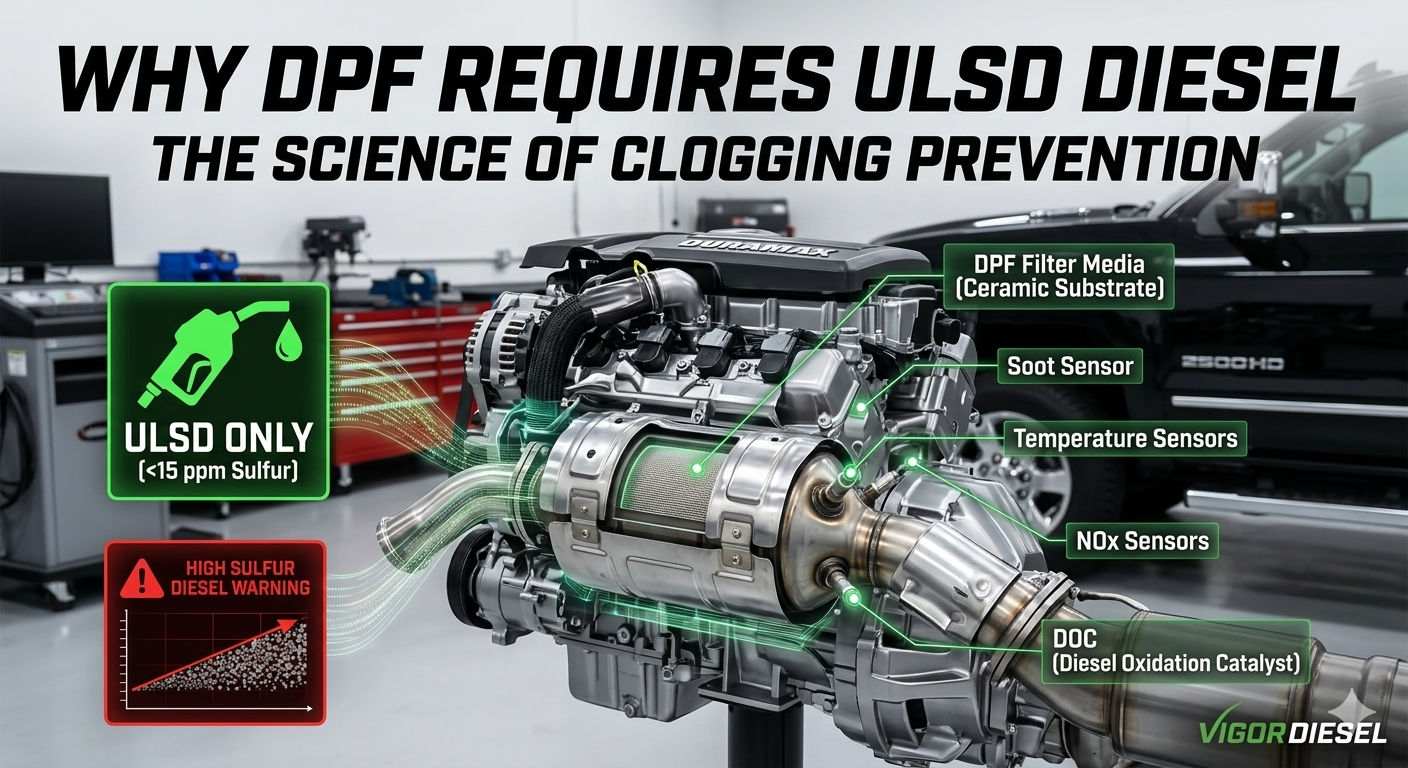
Modern emissions gear (DPF, EGR, NOx sensors) is a common service concern. Carbon buildup can clog EGR coolers, and DPF cycles may fail on short trips.
Symptoms are frequent regens, heat warnings, poor performance.
Prevention: Regular long drives to complete regens, timely filter cleaning, and sensor checks.
Some owners choose to address long-term emissions-related reliability concerns by upgrading or replacing factory components, including EGR delete kits or DPF delete pipes, where legally permitted and intended for off-road use.
5. Oil, Cooling, and Overheating Issues
Early 2011–2014 models sometimes experienced radiator leaks, coolant loss, or overheating.
Symptoms are overheating, low coolant warnings.
Solutions: Pressure testing, hose checks, quality coolant replacement.
6. Electrical and Sensor Malfunctions
EGT and NOx sensors were common failure points in first‑generation 6.7 Powerstroke engines.
Symptoms include dashboard warnings, limp mode, reduced performance.
Prevention: Replace faulty sensors promptly. Extended warranties covered some early failures.
7. Transmission and Drivetrain Malfunctions
Some trucks experience transmission shift issues, torque converter slipping, or driveline wear. Early models and high-mileage trucks are more prone to these problems.
Symptoms are hard or delayed shifts, unusual noises from drivetrain, vibrations.
Preventative measures to take: Regular fluid changes, inspect U-joints and differentials, and address shift issues quickly to prevent further damage.
FAQs
Conclusion
The 6.7 Powerstroke isn't a "perfect engine," but it's not a headache either. Most problems appeared in the first generation (2011–2014), mainly involving turbo bearings, emissions sensors, and the fuel pump. Reliability improved in later models, especially 2015 onward and 2020+.
Regular maintenance, timely part replacements, and sensible driving keep the engine running strong. For extra peace of mind, consider an emission system upgrade, which addresses common weak points and enhances long-term performance.