

For many diesel truck owners, the very first thing they think about is an EGR delete. The reason is simple: after years of use, the EGR system becomes a magnet for intake soot buildup, EGR cooler failures, lazy throttle response, and oil that turns black way too fast. That’s why a lot of owners start by looking for the right EGR delete kit for their truck. The goal is straightforward—clean up the intake side, keep the engine bay cleaner, and make the truck run more directly with fewer headaches.
The problem is that on most modern diesel trucks equipped with a DPF, the EGR is not a standalone part you can look at in isolation. Once you delete the EGR, you are not just making the intake cleaner—you are changing the working balance of the entire emissions system. A lot of owners start out wanting only an EGR delete, but before long they realize their DPF regens are happening more often, backpressure is climbing, and trouble codes keep stacking up. At that point, they usually end up dealing with a DPF delete, a DPF delete kit, or even a complete full delete setup. So why does that happen?
Why Is It Best to Delete the DPF After an EGR Delete?
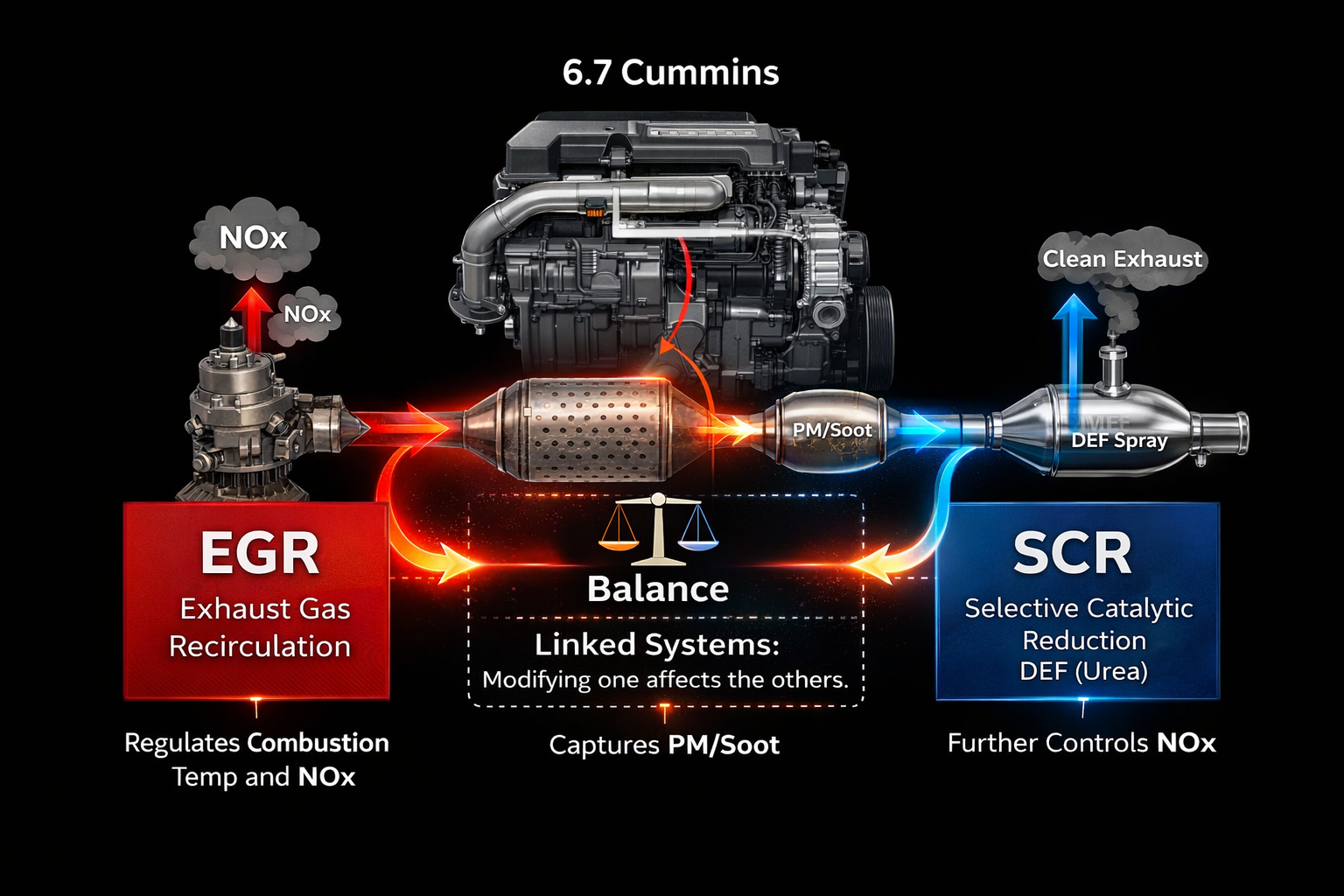
The reason is not just that “the DPF may clog faster.” The real issue is that the EGR and DPF are part of the same emissions control system. The EGR lowers combustion temperature to control NOx, while the DPF traps particulate matter (PM/soot). In factory calibration, these two systems are designed to work together and balance each other out. Once you perform an EGR delete, combustion temperature, exhaust composition, and flow behavior all change—but the DPF is still trying to operate on factory logic. That is when the whole system starts drifting away from the conditions it was designed for.
Put another way, an EGR delete changes the combustion side of the equation, while a DPF delete deals with the chain reaction on the exhaust side. If you install an EGR delete kit but leave the stock DPF in place, you are changing the input without correcting the output system. The usual result is erratic regen behavior, rising backpressure, and eventually fault codes or even Limp Mode. That is why, in the real world, many truck owners who start with an EGR delete eventually move toward a matching DPF delete or a complete DPF delete kit to bring the truck back to a stable and predictable state.
What Do EGR, DPF, and SCR Actually Do?
Before you can understand why an EGR delete often leads to a DPF delete, you first have to understand what each of these systems does and how they work together. A lot of owners get into trouble because they treat them like separate parts instead of seeing them as one connected system.
First, the EGR (Exhaust Gas Recirculation).
The EGR’s core job is to route a portion of exhaust gas back into the combustion chamber to lower combustion temperatures and reduce NOx (Nitrogen Oxides). It does reduce emissions, but the tradeoff is dirtier combustion, more soot in the intake, and more grime inside the engine. That is exactly why so many owners start shopping for an VIgor DieselEGR delete kit in the first place—they want to keep the engine internals cleaner and reduce common EGR-related failures.
Second, the DPF (Diesel Particulate Filter).
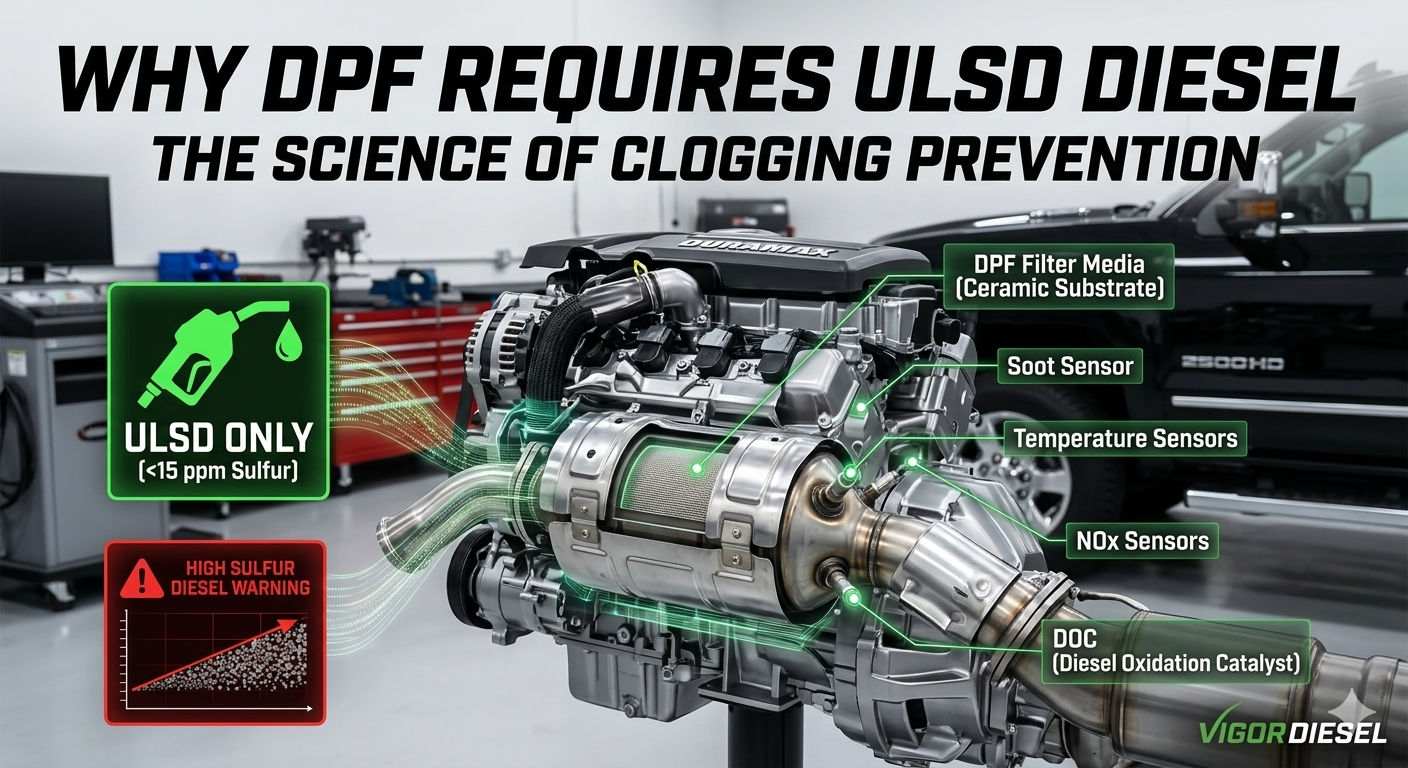
The DPF captures soot and particulate matter before it leaves the tailpipe. It then burns that soot off through a process called regeneration. The problem is that regeneration depends heavily on exhaust temperature, exhaust flow, and ECM logic. Once those conditions change—like they do after an EGR delete—the DPF no longer operates under the conditions it was designed around. That is why many owners who start with an EGR delete eventually begin looking into a DPF delete or DPF delete kit.
Finally, the SCR (Selective Catalytic Reduction) / DEF system.
On most newer trucks, especially 2011+ platforms, the SCR system sprays DEF (Diesel Exhaust Fluid) to break down NOx. In other words, the EGR and SCR work together to control NOx, while the DPF handles soot. On modern diesel trucks, these systems are engineered to work as a linked package—not as individual components you can casually separate without consequences.
In short: the EGR controls combustion temperature and NOx, the DPF handles particulate matter, and the SCR/DEF system cleans up the remaining NOx. From the factory, they are a balanced system—not three random emissions parts bolted onto the truck.
Why Does the Whole System Fall Out of Balance After an EGR Delete?
Once the EGR is deleted, the foundation that keeps the factory emissions system balanced changes with it. On a stock 6.7 Cummins, 6.7 Powerstroke, or LML Duramax, the system is working within a calibrated window. In normal operation, DPF regens typically happen every 300–800 miles, while DEF consumption usually stays around 2%–3% of diesel usage. That balance keeps NOx, soot, exhaust temperature, and backpressure within a range the ECM can predict and manage.
Once the EGR is removed, the air charge becomes cleaner, combustion temperatures rise, and the engine often feels sharper and cleaner internally. That is exactly why many owners go looking for an EGR delete kit. But the stock DPF and SCR were never designed around this new operating condition. They were designed around a truck that still had the EGR in place. The DPF regen logic, SCR dosing strategy, and ECM’s flow and pressure calculations all assume the old balance is still there.
That means after an EGR delete, the exhaust side is still trying to play by factory rules even though the input conditions have changed. The truck used to run one playbook, and now the engine is on a different page while the aftertreatment system keeps following the old script.
That is when the problems start stacking up. A truck that may have only needed a DPF regen every 500–800 miles can drop to 200–400 miles between regens after the EGR is deleted. On trucks equipped with SCR/DEF, the change can be even more obvious: a normal 2%–3% DEF usage rate can jump to 4%–8% or even higher. Without the EGR helping suppress combustion temperature and NOx, the SCR system has to spray DEF more aggressively to make up the difference. That increases the risk of DEF crystallization, clogging, and added thermal stress throughout the aftertreatment system.
So the result of deleting the EGR is not just “a cleaner engine.” It is a truck whose factory balance has been upset. DPF regens, DEF dosing, and ECM decisions all start drifting out of sync. Once that happens, the next things you usually see are regen issues, rising backpressure, changing DEF consumption, trouble codes, and eventually reduced power or full Limp Mode.
Why a Solo EGR Delete Usually Kills the DPF Faster
The first few days after an EGR delete usually feel pretty good. The engine bay looks cleaner. The intake is no longer swallowing soot. Throttle response may feel a little crisper. But that honeymoon phase usually does not last very long.
Deleting only the EGR while leaving the factory DPF in place is like making a runner wear a dust mask while hauling a loaded tool chest uphill. He can still move, but every step is harder than it should be. That is why a solo EGR delete is not just a “feels good now, hurts later” setup—it is a slow march toward beating your DPF into the ground.
1. Your DPF Starts Working Double Shifts With No Overtime Pay
In stock form, the DPF is like the cleanup crew that only has to punch in every so often. On many trucks, it may only need a regen about every 500 miles or so under normal conditions. But once the EGR is gone, the exhaust chemistry and system balance change. The DPF suddenly has to work under conditions it was never calibrated for.
What owners actually notice:
That “DPF Regeneration” message that used to show up once in a blue moon now starts popping up every few days. What used to be a once-in-a-while event starts becoming part of your normal driving routine.
The cost:
Frequent regens mean the truck is constantly burning extra fuel just to cook soot out of the filter. In plain terms, you are feeding expensive diesel into the exhaust just to keep the truck from choking on its own aftertreatment system.
2. The Truck Starts Feeling Winded and Heavy
When you only delete the EGR, backpressure on the exhaust side tends to build like steam in a pressure cooker. What used to be a free-flowing exhaust path starts feeling stuffed up because the DPF is now operating in an imbalanced system.
What that feels like from the driver’s seat:
You roll into the throttle, expecting your 6.7 Cummins to pull like a freight train, but instead it feels like the truck is dragging an anchor. The crisp pull you noticed right after the EGR delete starts fading. Throttle response gets duller, acceleration feels heavier, and instead of that clean diesel torque hit, the truck just sounds like it is working harder.
What the numbers suggest:
Under normal conditions, DPF differential pressure stays relatively low. But once the system falls out of balance, that pressure can climb 30%–50% higher than normal. That is basically like stuffing a shop rag in the exhaust—your turbo has to fight harder, and the truck ends up feeling short of breath.
3. The Aftertreatment System Turns Into a Rolling Oven
A lot of owners do not realize how hot a regen event really gets. During DPF regeneration, exhaust temps can hit 1200°F (about 650°C). If the truck is regening too often because the system is mismatched, the aftertreatment side starts acting like an oven that never really cools off.
The result:
That kind of repeated heat soak cooks expensive sensors—especially NOx sensors and EGT sensors. They are not cheap, and they do not enjoy living next to a system that is constantly baking itself.
The bigger threat:
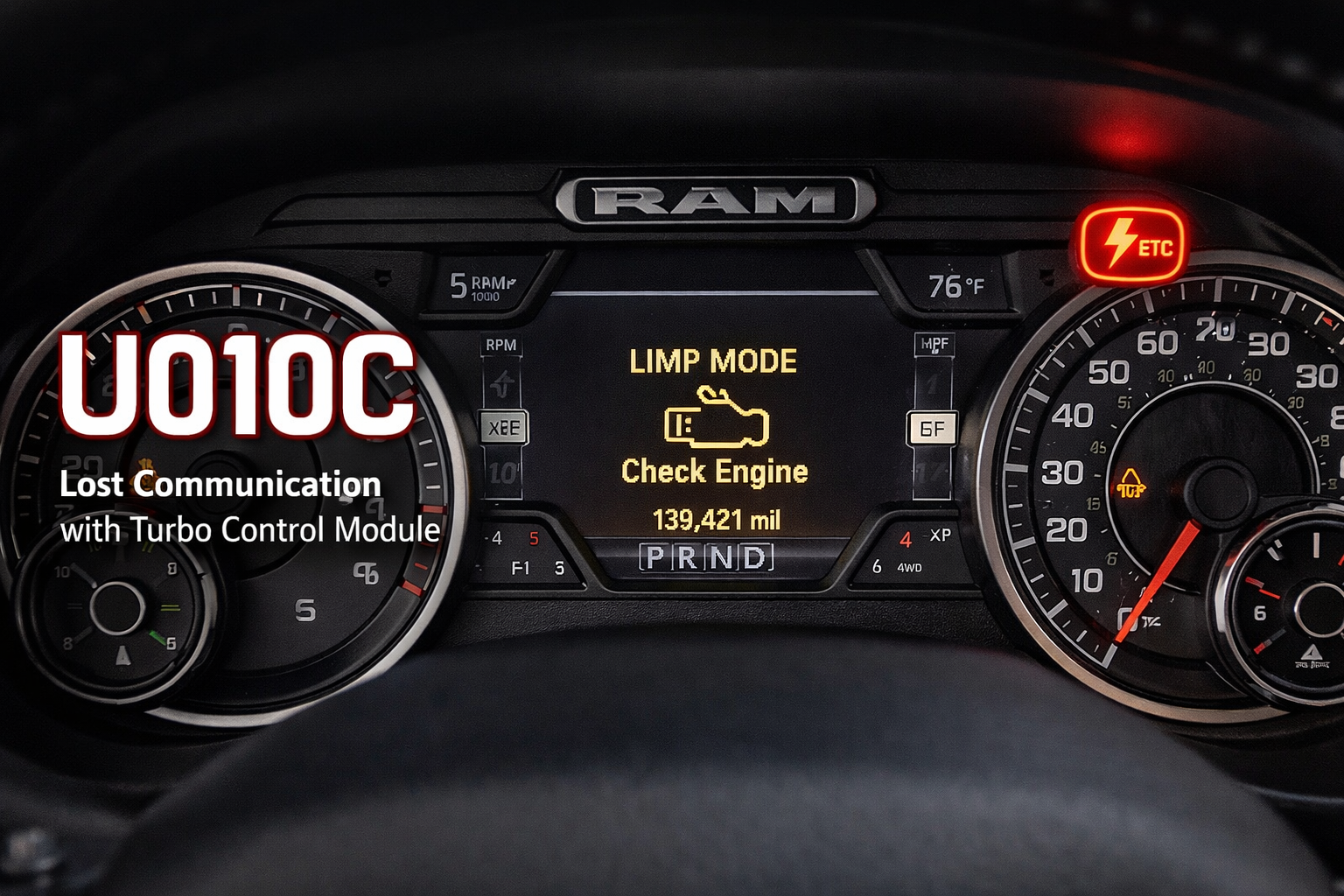
That heat does not stay neatly contained in one section of the exhaust. It works its way back toward the turbo side. On some trucks, that is where you start seeing failures tied to things like the dreaded u010c code 6.7 cummins. In real-world terms, your turbo actuator can get slow-cooked by a system that is living in constant high-heat stress.
4. DEF Consumption Starts Eating Into Your Wallet
On trucks equipped with SCR / DEF, this is one of the easiest symptoms to notice. Once the EGR is gone, NOx output goes up. The SCR system then tries to save the day by spraying more DEF.
What the numbers can look like:
A truck that used to use DEF at around 2% of fuel consumption may suddenly climb toward 8% under certain conditions. That means the DEF tank starts draining way faster than you are used to.
The real-world frustration:
You may not even finish a tank of diesel before the DEF light comes on. So yes, you may have saved yourself some future EGR repair money—but now you are pouring that money into the DEF tank instead. On top of that, the risk of DEF crystallizing in the exhaust system goes up as well.
5. In the End, Most Owners Wind Up at a Full Delete Anyway
A lot of truck owners buy only an EGR delete kit thinking that will be enough. But after dealing with soft power, more fuel burned during regen, fast DEF usage, and repeated fault codes, many of them end up saying the same thing:
“I should’ve just done the full delete the first time.”
Instead of forcing the DPF to keep grinding away under the wrong conditions until it finally gives up, many owners eventually move to a complete solution like a Vigor Diesel DPF delete kit.
Which Trucks Can Run a Solo EGR Delete, and Which Ones Should Delete Both EGR and DPF?
Not every diesel truck has to handle EGR delete and DPF delete the same way. The deciding factor is not the badge on the grille—it is which emissions phase the truck belongs to. The easiest way to look at it is this: is the truck an early EGR-only platform, a middle-stage EGR + DPF platform, or a newer EGR + DPF + SCR/DEF platform?
In other words, whether you can get away with deleting only the EGR does not depend on whether you want to save money. It depends on how complicated the truck’s emissions system really is.
Phase 1: EGR Only, No DPF (Early Models)
These trucks can usually run a solo EGR delete.
If a truck never had a DPF from the factory, then there is no downstream DPF logic to throw out of balance after an EGR delete. On these older platforms, owners are usually trying to clean up the intake, reduce carbon buildup, and avoid common EGR valve or EGR cooler issues. That is why an EGR delete kit is often a stand-alone choice on these trucks.
| Brand | Engine Platform | Year | Common Models | DPF | SCR/DEF |
|---|---|---|---|---|---|
| Ford | 6.0 Powerstroke | 2003–2007 | F-250 / F-350 / F-450 Super Duty | No | No |
| Ford | 6.0 Powerstroke (Van) | 2003–2010 | E-Series Van | No | No |
| Dodge/Ram | 5.9 Cummins | 2004.5–2007 | Ram 2500 / 3500 | No | No |
| GM | LB7 Duramax | 2001–2004 | Silverado / Sierra 2500HD / 3500 | No | No |
| GM | LLY Duramax | 2004.5–2005 | Silverado / Sierra 2500HD / 3500 | No | No |
| GM | LBZ Duramax | 2006–2007 | Silverado / Sierra 2500HD / 3500 Classic / New Body | No | No |
What defines these trucks:
- No DPF
- No DPF regen logic
- Much simpler aftertreatment system
That is why on these early platforms, most owners look at an EGR delete or EGR delete kit first. They are not shopping for a DPF delete kit because there is no DPF there to begin with.
Phase 2: EGR + DPF, But SCR/DEF Is Not Yet the Main Player
These trucks are usually better off deleting both EGR and DPF together.
Once a truck enters this phase, the game changes. It is no longer just an intake-side EGR issue. The truck now has a real DPF playing a major role in emissions control. That means if you delete only the EGR, the DPF has to keep fighting under new operating conditions by itself. That is exactly why so many of these trucks gradually develop backpressure issues, heat load problems, and trouble codes.
| Brand | Engine Platform | Year | Common Models | DPF | SCR/DEF |
|---|---|---|---|---|---|
| GM | LMM Duramax | 2007.5–2010 | Silverado / Sierra 2500HD / 3500HD | Yes | No |
| Ford | 6.4 Powerstroke | 2008–2010 | F-250 / F-350 / F-450 / F-550 Super Duty | Yes | No |
| Ram | 6.7 Cummins | 2007.5–2012 | Ram 2500 / 3500 / 4500 / 5500 | Yes | No* |
*2007.5–2012 Ram 6.7 Cummins trucks are mainly DPF-based platforms and did not yet use the same consumer DEF setup seen on later trucks.
What defines these trucks:
- They already have a DPF
- Aftertreatment behavior relies much more heavily on ECU/ECM control
- A solo EGR delete often turns the DPF into the next bottleneck
That is why on these platforms, the more stable path is usually not a stand-alone EGR delete kit, but a matched EGR delete + DPF delete approach.
Phase 3: EGR + DPF + SCR/DEF Fully Integrated Modern Trucks
These trucks usually make the most sense as a complete, matched solution.
Once a truck reaches the full EGR + DPF + SCR/DEF era, the systems are no longer just “related”—they are tightly tied together. At that point, removing the EGR changes more than just intake cleanliness and DPF behavior. It also changes DEF dosing strategy, NOx handling load, sensor behavior, and ECM logic.
| Brand | Engine Platform | Year | Common Models | DPF | SCR/DEF |
|---|---|---|---|---|---|
| Ford | 6.7 Powerstroke | 2011–2024 | F-250 / F-350 / F-450 / F-550 Super Duty | Yes | Yes |
| Ram | 6.7 Cummins | 2013–2024 | Ram 2500 / 3500 / 4500 / 5500 | Yes | Yes |
| GM | LML Duramax | 2011–2016 | Silverado / Sierra 2500HD / 3500HD | Yes | Yes |
| GM | L5P Duramax | 2017–2024 | Silverado / Sierra 2500HD / 3500HD | Yes | Yes |
What defines these trucks:
- They have EGR
- They have DPF
- They have SCR / DEF
- They use more sensors and tighter ECM monitoring
- Half-finished delete setups are much more likely to create long-term instability
On these newer trucks, the question is usually no longer “Can I delete only the EGR?” The real question becomes whether the rest of the system can continue operating reliably after the EGR is gone. That is why many owners planning a real solution on these trucks end up considering not only an EGR delete kit, but also a DPF delete, a platform-specific DPF delete kit, and the correct tuner.
Bottom line: the newer the platform, the more complex the aftertreatment system—and the more expensive it becomes to leave the stock DPF in place after deleting the EGR.
How to Choose a Tuner: EZ Lynk, Minimaxx, HP Tuners, and EFI Live
| Tuner Type | Representative Product | Core Features | Pros | Cons | Best For |
|---|---|---|---|---|---|
| 1st Gen (Entry-Level) | Minimaxx | Pre-loaded tunes, direct flashing | Simple, quick to use, familiar to older users | Limited flexibility, no true modern cloud workflow | Older platforms, owners who want a “flash it and run it” setup |
| 2nd Gen (Professional) | EFI Live | Professional tuning platform | Mature ecosystem, stable, supports deep custom tuning | More complex, depends heavily on tuner experience | Owners with access to a skilled tuner, users focused on proven custom tuning |
| 2nd Gen (High-Freedom) | HP Tuners | Tool-based tuning platform | Very flexible, strong data control, highly customizable | Steeper learning curve, not beginner-friendly | Advanced users, DIY tuners, shops that want more control |
| 3rd Gen (Cloud-Based) | EZ Lynk AutoAgent 3 | App-based interface + cloud-delivered files | Easy to use, remote support, quick file delivery, data monitoring | Depends more on modern digital workflow and file delivery | Modern diesel truck owners who want a simpler, more support-driven experience |
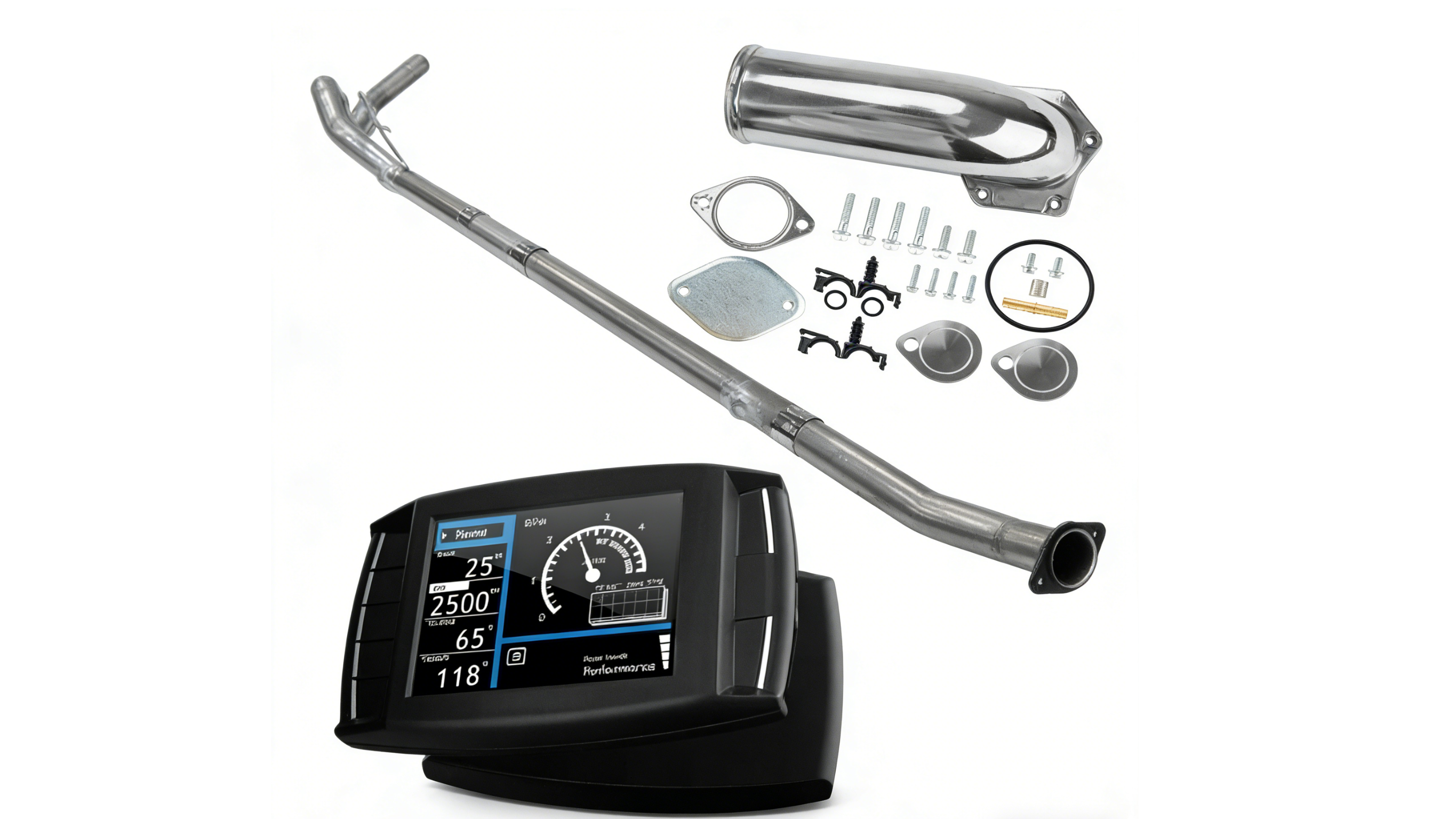
When most people think about an EGR delete or DPF delete, they focus on the hardware first—things like an EGR delete kit or DPF delete kit. But on a modern diesel truck, the part that decides whether the truck will actually run correctly afterward is the tuner and the tune file.
Put simply:
Hardware changes the airflow and exhaust path.
The tuner tells the ECU how to deal with those changes.
Without the right tuning, even a fully installed delete setup can still trigger fault codes, regen confusion, DEF system issues, and Limp Mode.
There is no one “perfect” tuner for every owner. The right choice depends on your truck, your platform, your comfort level, and whether you want a simple user experience or a deep custom-tuning route. That is why Minimaxx, EFI Live, HP Tuners, and EZ Lynk all still have their place.
Crucial Rule:
All tuners must be paired with the correct delete files, and the install order matters: Flash the tune first, then remove or install hardware.
Why EGR Delete + DPF Delete + Tuner Is the More Complete Solution
The Real Value Is Not “Deleting More” — It Is Getting the System Back on the Same Page
The real value of a complete setup is not that you removed more parts. It is that the truck returns to a more consistent, controlled operating state.
When an EGR delete, DPF delete, and tuner are all matched together:
- The intake side is no longer constantly feeding on soot
- The exhaust side is no longer strangled by DPF backpressure and regen cycles
- The ECU logic is recalibrated to match the new airflow and emissions state
That means you are not just fixing one symptom—you are simplifying the whole system and making it easier for the truck to operate consistently over the long haul.
In the Long Run, the Complete Route Often Costs Less
A lot of owners hesitate because doing only an EGR delete seems cheaper at first. But in the real world, the money usually gets spent anyway:
- First you buy an EGR delete kit
- Then you start dealing with DPF-related issues
- Then you still have to add the right tuner
- Then you pay for repeat labor, repeat troubleshooting, and repeat downtime
That kind of piecemeal approach often ends up costing more than just choosing the right direction from the beginning.
On the other hand, if you start with a properly matched package—such as an EGR delete, DPF delete, DPF delete kit, and the right tuner—the install path is cleaner, the troubleshooting is reduced, and the long-term ownership experience is usually much smoother.
Conclusion
If your truck does not have a DPF, then a solo EGR delete can absolutely make sense. But for most modern diesel trucks, deleting only the EGR is usually just the first step—and sooner or later, many owners end up moving toward a DPF delete or a complete delete setup anyway.
So which route makes more sense to you?
Would you rather try a solo EGR delete first—or handle the EGR and DPF together the first time and be done with it?