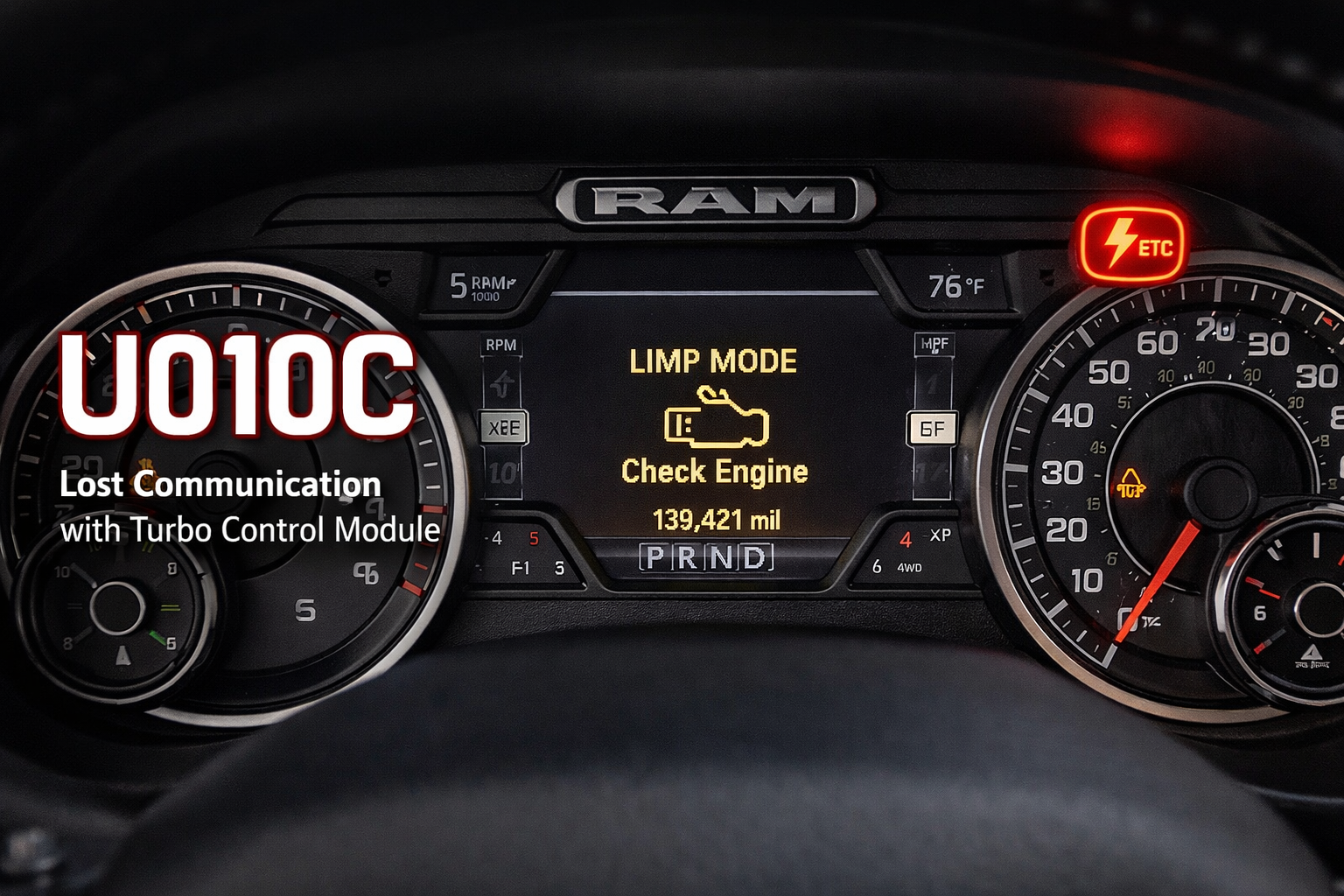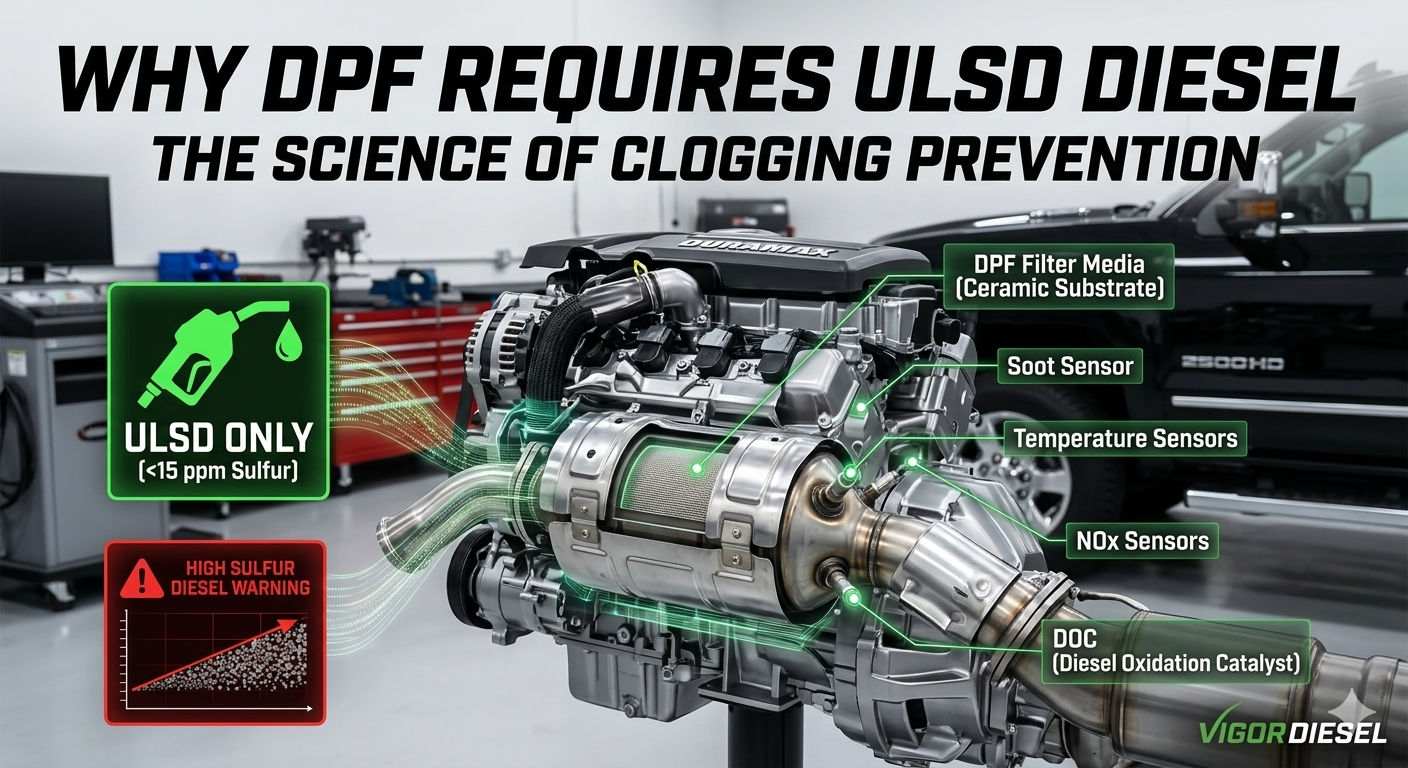


The P246C code on a 6.7 Powerstroke indicates excessive DPF restriction that has triggered forced limited power. Sometimes this Ford code clears with a forced regeneration that costs a few hundred dollars. Other times, it ends with a Diesel Particulate Filter (DPF) replacement that runs $3,000–$4,000 or more.
Often, drivers notice the warning before major symptoms appear, but ignoring OBD code P246C can result in failed regenerations, reduced engine performance, and expensive repairs. Understanding what triggers this code and how to fix it can help prevent long-term damage.
- Ford P246C signals severe DPF restriction and high exhaust backpressure.
- The PCM may reduce power to protect the engine and turbo.
- Interrupted or failed regenerations are common causes.
- Early diagnosis can prevent full DPF replacement.
- Driving habits, idle time, and short trips significantly affect recurrence.
What Does P246C Code Mean?
DTC P246C means Diesel Particulate Filter Restriction – Forced Limited Power.
On the 6.7 Powerstroke, exhaust pressure sensors measure pressure before and after the DPF. When the PCM sees pressure readings indicating heavy soot loading or blockage, and regeneration cannot restore flow, DTC P246C is triggered.
Unlike early DPF codes that indicate mild inefficiency, P246C Ford 6.7 diesel signals that restriction has reached a critical stage.
Common Symptoms of P246C Ford Code
Symptoms can develop gradually or suddenly, depending on soot accumulation:
- Loss of engine power.
- Forced limited power or limp mode.
- Dashboard warnings about exhaust filter restriction.
- Poor acceleration under load.
- Elevated exhaust temperature during regen attempts.
- Check Engine Light illuminated.
If ignored, trucks may struggle with highway speeds or towing safely.
Possible Causes of P246C Code on 6.7 Powerstroke
P246C Ford code on the 6.7 Powerstroke is usually caused by soot accumulation rather than wiring issues. Common triggers include:
- Excessive soot buildup in the DPF.
- Repeatedly interrupted regeneration cycles.
- Short-trip or low-speed driving.
- Long idle periods.
- Faulty exhaust backpressure sensors.
- Exhaust leaks upstream of the DPF.
- Engine problems that increase soot output (EGR or turbo issues).
These factors prevent the DPF from self-cleaning properly.
How to Diagnose Code P246C on 6.7 Powerstroke
Diagnosis begins with confirming Ford P246C using a professional scan tool.

- Check live exhaust pressure and soot load values.
- Review regeneration history to see if cycles are failing or interrupted.
- Inspect exhaust components, sensors, and connections for leaks or damage.
- Verify pressure sensor readings against manufacturer specs.
If soot levels exceed safe limits, the DPF may no longer be serviceable, even if sensors are functioning.
Repair Solutions for DTC P246C Code
Repair depends on how restricted the DPF has become. Start with the simplest, least expensive options:
1. Forced DPF regeneration
Burns off soot if the filter is still serviceable.
2. Repair exhaust leaks
Restores accurate backpressure readings.
3. Replace faulty exhaust pressure sensors
Ensures proper PCM data.
4. Address engine issues
Fix EGR or turbo problems contributing to soot.
5. Professional DPF cleaning
Removes ash and soot when regeneration alone fails.
6. DPF replacement
Required when the filter is permanently restricted.
7. DPF Delete
Some vehicle owners may try solutions such as the Vigor Diesel Powerstroke DPF delete kit to prevent the recurrence of the P246C fault code, but it is essential to verify local and federal emissions regulations before modifying emissions equipment.
Compliance note: DPF delete or modification is only permitted for off-road or non-emissions control applications and must be done within the limits allowed by law.
Vehicles Commonly Affected by P246C
OBD code P246C is most often seen on Ford trucks with the 6.7L Powerstroke:
| Make | Model | Years | Notes |
| Ford | F-250 Super Duty | 2011-2022 | Frequent short trips increase risk |
| Ford | F-350 Super Duty | 2011-2022 | Towing increases soot load |
| Ford | F-450/F-550 | 2011-2020 | Long idle or heavy-idle use worsens restriction |
Trucks used for city driving, short trips, snow plowing, or frequent idling see a much higher failure rate.
Repair Cost Estimate for P246C
Costs depend on the severity of the restriction and the timing of repair. Early intervention saves money.
| Repair Item | Estimated Cost (USD) |
| Diagnostic scan | $100-$150 |
| Forced DPF regeneration | $150-$400 |
| Exhaust pressure sensor replacement | $200-$600 |
| Exhaust leak repair | $300-$800 |
| Professional DPF cleaning | $400-$800 |
| DPF replacement | $3,000-$4,000+ |
In repeated DTC P246C Ford cases, some owners also factor in the cost of a DPF delete for the 6.7 Powerstroke as a long-term alternative, typically $200–$600.
Prevention Tips for P246C
Good habits help prevent repeat Ford code P246C events on the 6.7 Powerstroke:
- Complete regeneration cycles – Interrupted regen causes soot buildup.
- Avoid long idle periods – Idling increases soot without burn-off.
- Periodic highway driving – Supports passive regeneration.
- Respond to warnings immediately – Ignoring messages worsens restriction.
- Maintain sensors and exhaust components – Faulty readings can trigger forced power mode.
- Address engine performance issues promptly – EGR or turbo problems accelerate soot loading.
Following these steps significantly extends DPF life and prevents forced limited power events.
FAQs about P246C Code
Conclusion
The P246C code on a 6.7 Powerstroke warns that the DPF has reached a restriction level that can limit engine power. While trucks may continue to run, ignoring this fault often leads to repeated limp-mode events, failed regenerations, and costly DPF replacement.
Acting early, through proper diagnosis, sensor checks, and completed regenerations, can save thousands in repairs. Save this guide, respond promptly to warning messages, and consult a qualified diesel technician. Where emissions laws allow, off-road owners may also consider Vigor Diesel Powerstroke DPF Delete Kits as a long-term solution to prevent recurring DPF restriction faults.