

Is the 6.7-liter Powerstroke engine reliable? And is the 6.7 Powerstroke a good engine? The answer is yes—if you take care of it. Ford built this diesel V8 for the heavy-duty life: towing, hauling, and racking up miles in F-250, F-350, and F-450 trucks. When it's looked after properly, a 6.7 Powerstroke can easily outlast the truck itself.
This article covers 6.7 Powerstroke reliability, common issues and solutions, reliability upgrades, comparisons with 6.7 Cummins and 6.6 Duramax engines, and expected service life. By the end, you'll have a solid sense of whether the 6.7 Powerstroke is reliable enough.

6.7L Powerstroke Engine Overview
The 6.7 Powerstroke is built for work. It replaced the older 6.4L diesel with a tougher, smarter design straight from Ford, giving the company full control over reliability and performance. The engine is made to handle heavy miles, towing, and the daily grind. Its compacted graphite iron block, strong internals, and turbo setup provide durability while still giving a solid response when you need it.
Ford has fixed the early problem spots, so newer 6.7 Powerstroke engines are much more durable. Whether you're towing heavy loads, running a work truck every day, or even adding performance tweaks, these engines can take it without drama.
Is the 6.7 Powerstroke Reliable?
When you take care of it, the 6.7 Powerstroke is generally reliable. It's a big step up from older Ford diesels.
Key reliability points:
- Designed for heavy-duty towing, hauling, and high-mileage use.
- Long-term data shows durability across multiple model years.
- Later models (2015 onward) demonstrate significantly improved reliability.
Routine maintenance, oil changes, fuel filter checks, and proper use of emission-compliant parts increase life of a 6.7 Powerstroke.
6.7 Powerstroke Reliability by Model Year
Reliability changes with time, so it's useful to consider each model when evaluating Ford 6.7 Powerstroke reliability:
- 2011 6.7 Powerstroke reliability: Early models had turbo and CP4 fuel pump issues, but were strong when maintained.
- 2012 6.7 Powerstroke reliability: Minor improvements over 2011. Some early turbo failures are still possible.
- 2015 6.7 Powerstroke reliability: Significantly better reliability with refined turbo and fuel system.
- 2017 6.7 Powerstroke reliability: Continued improvements. Fewer high-pressure fuel pump failures.
- Later models (2024–2025): High-output engines are expected to be solid, with updated emissions systems and towing improvements.
Across all model years, proper maintenance and attentive operation greatly enhance the reliability of 6.7 Powerstroke engines.
Common 6.7 Powerstroke Reliability Issues
Even reliable engines have weak points. For the 6.7 Powerstroke, these are:
- High-pressure fuel pump (CP4.2) failure: A known weakness, particularly in 2011–2014 models. Regular maintenance and monitoring fuel quality help prevent major damage.
- Cold-side intercooler piping leaks: Can reduce boost and performance. Inspecting hoses and clamps periodically is key.
- Secondary fuel filter leaks/embrittlement: Stick to Ford’s recommended schedule to prevent fuel starvation.
- Early turbocharger concerns: Mostly limited to 2011–2014 trucks. Newer turbos are more robust.
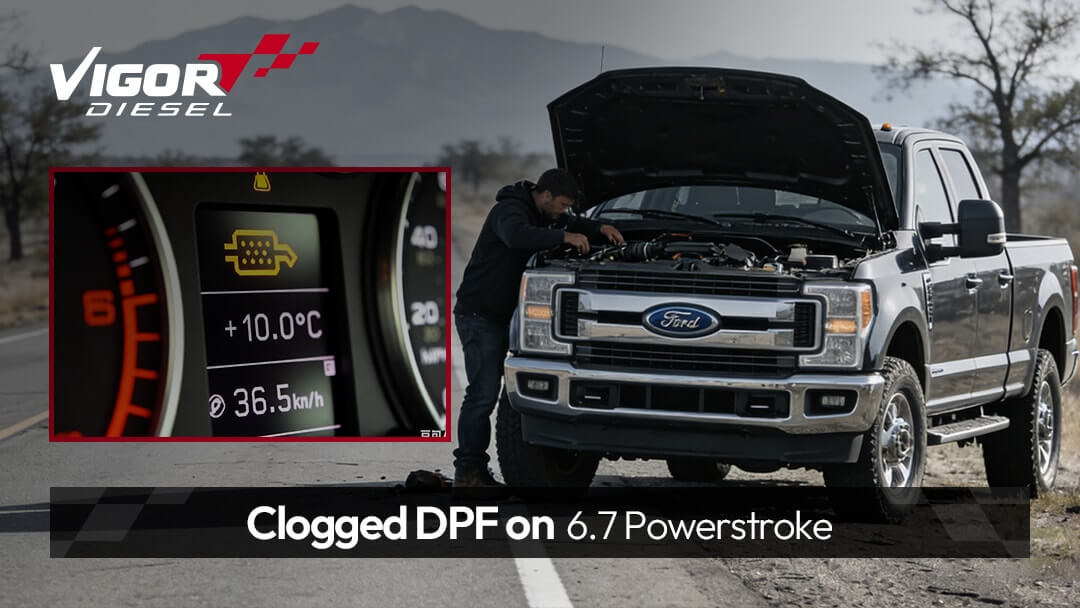
- Emission system blockage (DPF/EGR/SCR): High-mileage trucks may experience DPF clogging. Regular highway driving and proper regeneration cycles help keep the system healthy.
For frequency and detailed solutions, see common 6.7 Powerstroke problems.
6.7 Powerstroke Reliability Upgrades (Recommended Mods)
For owners focused on long-term durability, several preventative upgrades can improve the overall reliability of a 6.7 Powerstroke — especially on higher-mileage or early-model trucks.
1. CP4 Fuel Pump Protection Upgrades
The Bosch CP4.2 high-pressure fuel pump used in 2011–2019 models is known to be sensitive to fuel lubricity. Many owners install:
- CP4 disaster prevention kits
- Upgraded fuel filtration systems
- Additional water separators
These upgrades do not increase power but can significantly reduce the risk of catastrophic fuel system damage.
2. Upgraded Cold-Side Intercooler Pipe
Factory plastic cold-side pipes may crack under higher boost pressure. Replacing them with aluminum or reinforced aftermarket piping improves boost stability and reduces failure risk.
3. Improved Monitoring Systems
Installing EGT gauges or digital monitoring equipment allows owners to track exhaust temperature, regeneration cycle count, and fuel pressure changes. This allows for early detection of problems, preventing minor issues from escalating into costly repairs.
4. Exhaust Flow & Emissions System Considerations
Some off-road or racing vehicle owners may consider exhaust modifications, such as removing the DPF system to reduce exhaust back pressure.
Important Legal Notice : Under the U.S. Clean Air Act, removing or modifying factory-installed emissions equipment is prohibited. DPF delete kits and similar components are only applicable to off-road or racing vehicles.
6.7 Powerstroke vs Competitors: Reliability Comparisons
When comparing reliability:
| Engine | Reliability | Notes |
| 6.7 Powerstroke | High (2015+) | Improved durability. CP4 fuel pump main weak point in early years |
| 6.7 Cummins | Very High | Simple mechanical design, low-end torque. Often outlasts chassis |
| 6.6 Duramax | High | Smooth operation, less frequent major failures, but some early injectors had issues |
Overall, Ford 6.7 Powerstroke reliability is competitive. It may require slightly more care than a 6.7 Cummins, but it offers better towing tech integration. When comparing 6.6 Duramax vs 6.7 Powerstroke reliability, the Duramax is dependable, but the Powerstroke shines for modern heavy-duty applications.
Conclusion: Is the 6.7 Powerstroke a Good Engine?
The 6.7 Powerstroke is a tough, dependable engine that can really go the distance. Later model years are especially solid, and simple things like regular oil changes and keeping up with maintenance make a huge difference. If you want to squeeze a bit more life or performance out of it, there are reliability upgrades that can help.
For off-road competition vehicles, some owners explore exhaust system modifications to reduce backpressure. Always ensure compliance with federal, state, and local emissions regulations before modifying any emissions-related components.
FAQs