

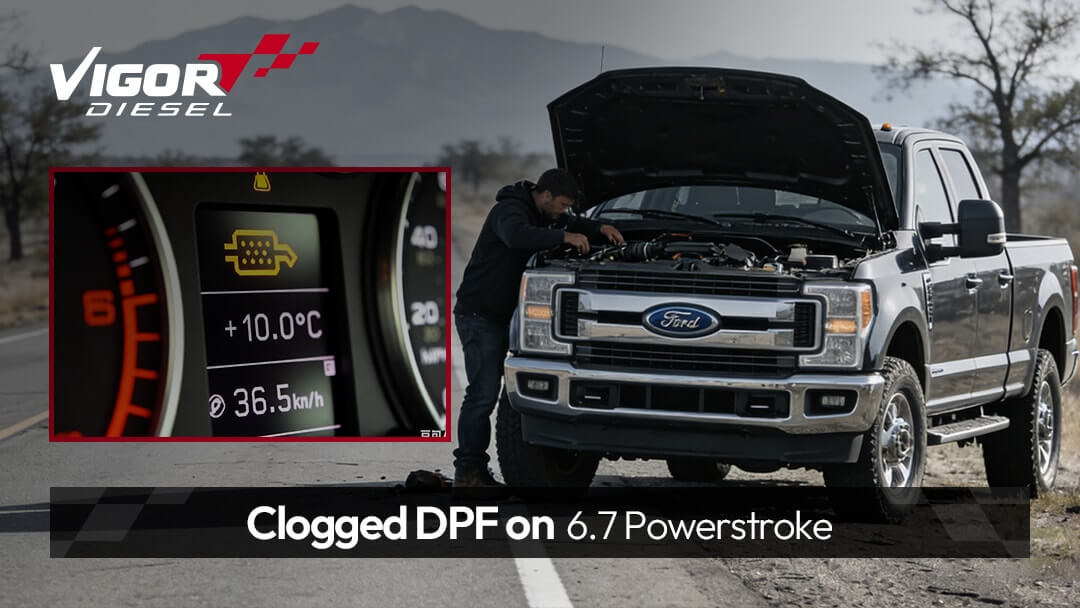
Wondering why DPF clogging matters? It is a serious concern, as the filter plays a key role in emissions control. When a diesel particulate filter is blocked, it can increase fuel consumption, activate warning lights, and reduce engine power, forcing your truck into limp mode.
Ignoring earlier clogged DPF filter symptoms may cause long-term engine stress and costly DPF issues. Many truck owners first notice "diesel particle filter warning," "poor fuel economy," and "loss of throttle response."
Early understanding of these indicators helps you avoid experiencing diesel particulate filter problems. Let's get into detailed specifics.
What Is a Diesel Particulate Filter (DPF)?
A DPF is a key component of the exhaust system. The primary function of this filter is to trap and store harmful soot particles generated during diesel combustion, lowering emissions before the tailpipe releases the exhaust gases.
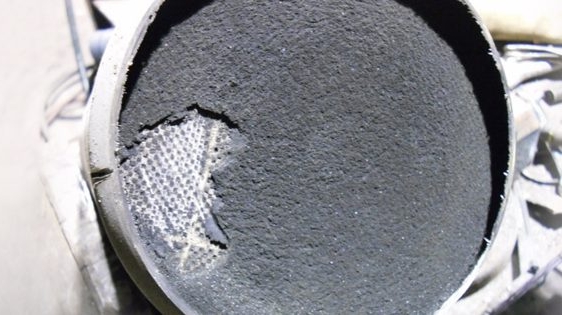
When soot buildup exceeds the filter regeneration capacity (as mentioned earlier), the DPF becomes clogged, and it restricts exhaust flow. As a result, the engine compensates by adjusting exhaust pressure and fuel delivery. It often leads to various drivability problems.
In simple terms, the state of DPF filter clogging implies that the engine no longer is able to clean the exhaust gases efficiently.
Why Do 6.7 Powerstrokes Get Clogged?
6.7 Powerstroke is a reliable diesel engine, but its performance largely depends on operating conditions. Here is why it gets clogged.
- Frequent Short Trips: They don't allow exhaust to reach regeneration temperatures.
- Heavy Traction: Stop-and-go driving or heavy towing increases soot production.
- Poor-Quality Fuel: Low-quality fuel burns less cleanly.
- Incorrect Engine Oil: Low-quality or incorrect engine oil contributes to ash buildup.
- Lack of Maintenance: Delaying sensor issues and oil changes often leads to a clogged DPF.
These factors increase the DPF clogging risks in 6.7 Powerstrokes.
6.7 Powerstroke Clogged DPF Symptoms You Should Never Ignore
This section presents the most common and severe blocked particulate filter symptoms, specifically associated with the 6.7 Powerstroke engines.
Common Symptoms
- Warning Light Indicators: The most common warning on the dashboard — diesel particulate filter light or DPF filter warning light — shows that the system has detected excessive soot buildup.
- Poor Acceleration: A clogged DPF filter causes delayed or sluggish acceleration by restricting exhaust flow.
- Increase Fuel Consumption: More frequent regen cycles lead to higher fuel consumption. — one of the most common blocked DPF symptoms in the 6.7 Powerstroke.
- Engine Warning Messages: Emissions or exhaust system alerts usually appear during the earlier stages of diesel particulate filter problems.
Severe Symptoms that Need Your Immediate Attention
- Power Loss or Limp Mode: A severely blocked particulate filter can trigger limp mode to prevent the 6.7 Powerstroke engine from damage.
- Unstable Idling or Jerking: A blocked DPF filter can generate unstable exhaust pressure, leading to jerking or rough idling when accelerating.
- Increase Exhaust Smoke: If you see more smoke than usual, it can be due to incomplete combustion caused by diesel particulate filter issues.
- Burning or Ash Smell: A strong odor often indicates excessive heat buildup or failed regeneration within the clogged DPF system.
- DPF Regeneration Failure: Repeated failed DPF regenerations usually signal diesel particulate filter problems. They often occur before engine power reduction or limp mode.
Key Takeaways for 6.7 Powerstroke Owners
This section talks about preventive measures to avoid DPF clogging in a 6.7 Powerstroke engine, or what to do if you have already noticed the potential clogged DPF symptoms.
How to Prevent DPF Clogging?
- Always avoid frequent short trips.
- Use premium-quality diesel for better performance.
- Use manufacturer-recommended engine oil to extend engine life.
- Allow your truck to complete its regen cycles.
- Carefully follow the official 6.7 Powerstroke maintenance schedule.
- Consider professional cleaning.
What to Do If You Notice DPF Clogging Symptoms?
- Pay immediate attention to the DPF filter warning light.
- Take your diesel truck on a longer highway trip to support passive regeneration.
- Inspect for sensor issues or exhaust leaks to prevent damage.
- Scan for diagnostic codes to identify specific engine or DPF faults.
- Avoid heavy acceleration or towing until the DPF clogging issue is fixed..
- If 6.7 powerstroke clogged DPF symptoms persist or worsen, consult a diesel or Ford engine specialist on a priority.
Many truck owners look for DPF removal options for off-road use. Remember, the removal must comply with local emission laws.
FAQs
Summing Up
A 6.7 Powerstroke clogged DPF is a common problem for diesel truck owners, but it is manageable through early identification of potential symptoms, including increased fuel consumption, warning lights, and loss of power.
If diesel particulate filter problems are addressed in a timely manner, truck owners can prevent engines from severe damage. Routine maintenance, timely intervention, and proper driving habits keep you away from experiencing costly repairs and extend the engine's life.